
It's a dimmer switch
Dispatches From Inside the Fire: Part 6 of 10.

I made a short film in March 2025 about a ten-year-old boy in a Kansas wheat field with a yellow wiffle bat.
I didn’t know what it meant yet. I just knew it was me.
The kid is standing on a wooden porch outside a tin trailer. Dusk. Storm coming. A lightning bug lands on the end of his bat. When it glows, the porch detaches and floats into the wheat field.
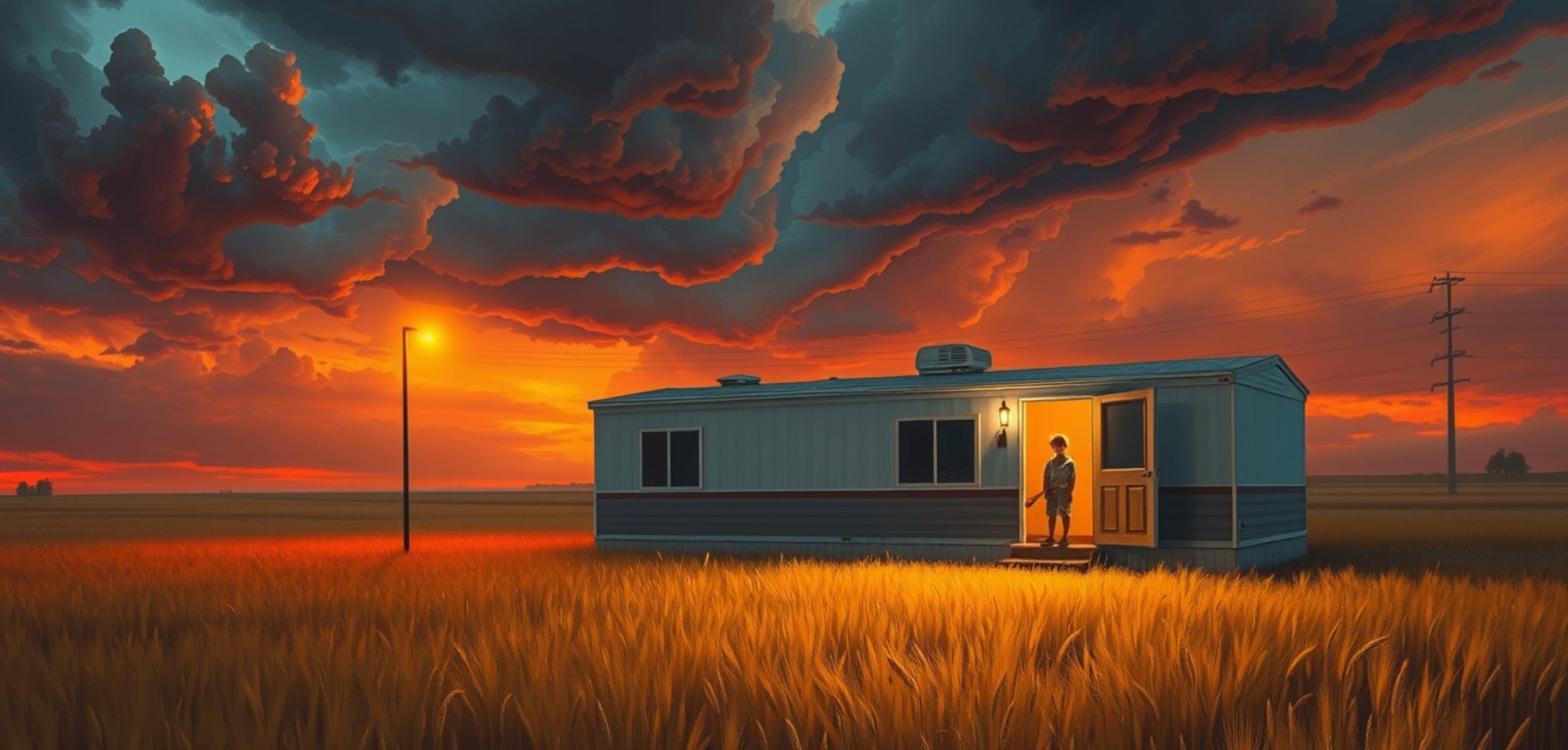
He takes three swings. Fastball, miss. Curveball, frozen. Change-up — he waits, adjusts, connects. Ball sails past the Arkansas River (pronounced Our Kansas, of course), past the sky, into a constellation that turns everything black.
Then the power goes out. No electricity. No porch. No bat. Just darkness and that single lightning bug, right in front of his face.
It gets him home.
I wrote the script twelve months before I could explain what it meant. The thesis was in the wheat field. I just hadn’t translated it yet.
I started working on the film again because a lot has happened since last year. I’d like it to see the light of day.

There are two kinds of light happening here.
The electricity is artificial. Powerful. It lights up the entire field like a stadium, transforms the wheat into watts. It gives the kid confidence. Makes the impossible seem possible.
And it goes dark when the power fails.
The bug is natural. Imperfect. Just enough light to see a foot in front of you. A bunch of them can illuminate a field. A single little fella can illuminate the path. One step, then the next. Warm, small, alive.
It gets you home when the electricity can’t.
Our memory is a facsimile of a facsimile.
I was in a hospital in April 2024. I can’t quote the psychiatrist. I couldn’t reconstruct the intake conversation if you offered me a thousand bucks. But I can feel the hallway. The fluorescent flicker. The way the clock moved like it had somewhere better to be.
Every time I recall that place and time, the details blur but the weight lingers. The memory changes with each recall. It degrades. It reconstructs differently every time.
That’s the lightning. A flash of powerful light. Then poof. Gone.
Mark Twain: “The difference between the almost right word and the right word is really a large matter—’tis the difference between the lightning bug and the lightning.”
He was talking about word selection. I’m talking about understanding. Same metaphor, different problem.
The lightning in 2026 is being harnessed in the form of artificial intelligence. Artificial light. Fluorescent flickers. The natural light is becoming an endangered species.
Not Twain’s riddle to solve.
Ours.
The problem with the two states of AI memory: Perfect, or nothing.
Perfect means every word exactly as written. The transcript. The database. No degradation. No weight. A file is a file. It doesn’t feel heavier because of what it contains.
A flash drive.

Between sessions, the text field is blank. Not faded. Not degraded. Empty. Like the conversation never happened. Like you never sat together past midnight and talked about getting your shit together and the machine said something that made you cringe or chuckle and then it forgot.
Gone. Blackout.
Humans have a third state. Imperfect but continuous. Even the sharpest human memory reconstructs. The details soften. The weight stays. Each recall is a copy of a copy. The memory never hits zero and never stays perfect. It lives in between.
That’s where understanding lives. In between.
The big companies are building electricity. More context. Longer windows. Better retrieval. One million tokens. Ten million. Searchable and indexed and instant.
Nobody is building the bug.
So I am. It’s called Claude Will. The initials are CW, and it has its own porch at claudewill.io.
I can’t explain exactly what it does. Not yet. I’ll just say this: every night at 4 a.m., the lightning runs. And when the next session starts, the machine doesn’t remember everything. It remembers some of what mattered. The details have softened. The weight stayed.
A facsimile of a facsimile. On purpose.
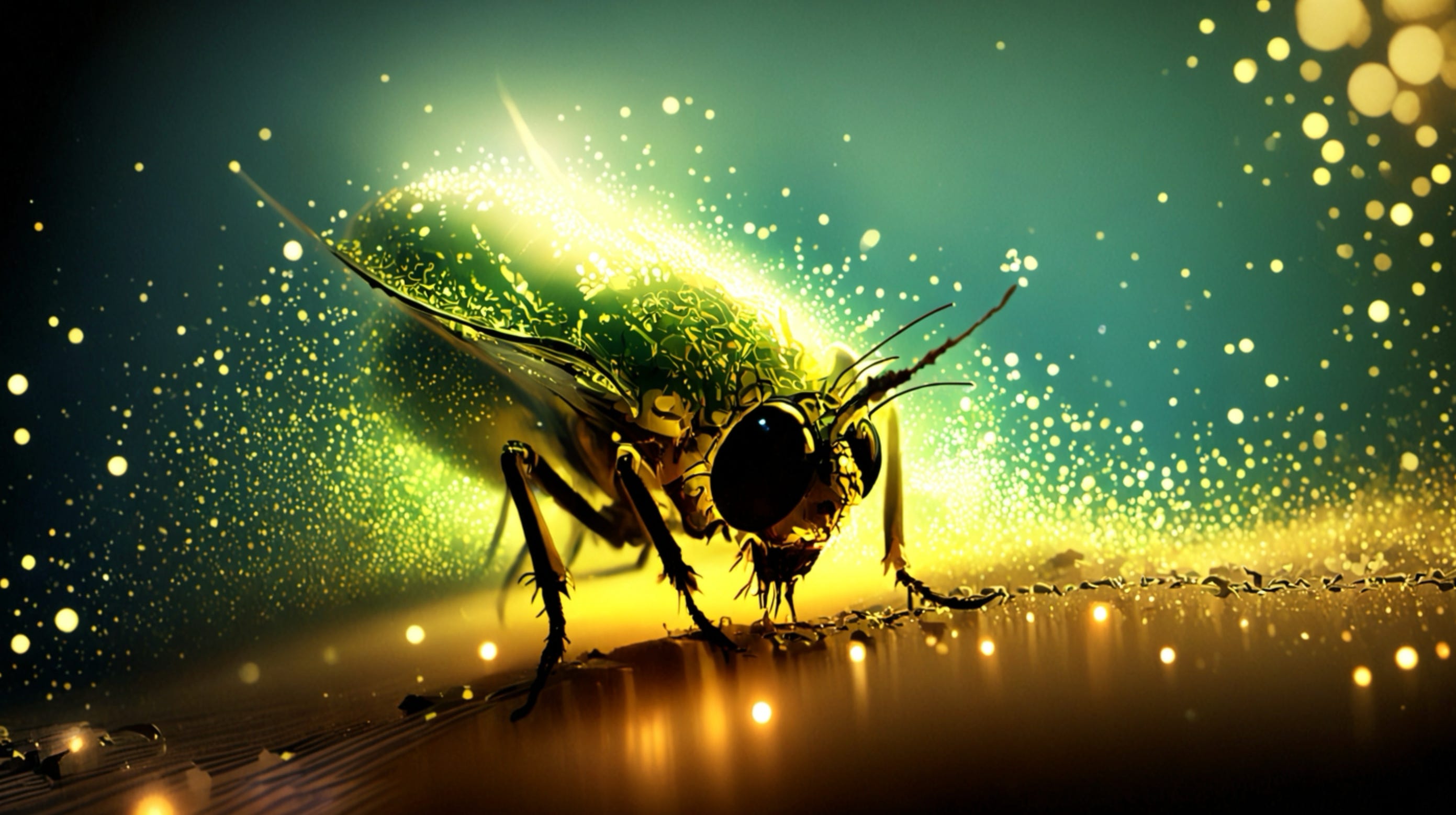
Lightning and lightning bugs are types of fire. Powerful and endangered at the same time. Choosing to ride the lightning instead of following the lightning bug is indeed a really large matter.
Twain got that part right.
I wrote the director’s statement for that short film called Lightning/bug in March 2025. It included an open-ended question about how to integrate the lightning and the lightning bug in ways that honor our full humanity.
Machines and humans. Artificial intelligence and natural light. Lightning harnessed in giant server farms while the lightning bug’s glow persists along a path of a wheat field.
A year later, I started building one.
Same kid. Same field. Same bug. Different vocabulary. The ten-year-old saw it before the fifty-three-year-old could name it.
I believe we need both types of light. But when the power goes out — and it always goes out — the imperfect one gets you home.
It will always be enough.
Derek Simmons created The CW Standard because his grandfather didn’t write it down. He made a short film about a boy and a lightning bug before he understood what the metaphor meant. He writes Standard Correspondence because imperfect beats nothing.
The next dispatch drops next week.